Hot take
What a BachaZouk Weekend Exposes About Your Bachata
I just spent a whole weekend dancing Sensual Bachata next to Brazilian Zouk dancers, and I have news: most of what we call 'advanced bachata' falls apart the moment a zouk dancer touches it. Here is what the fusion floor exposes — and why it will make you better if you let it.
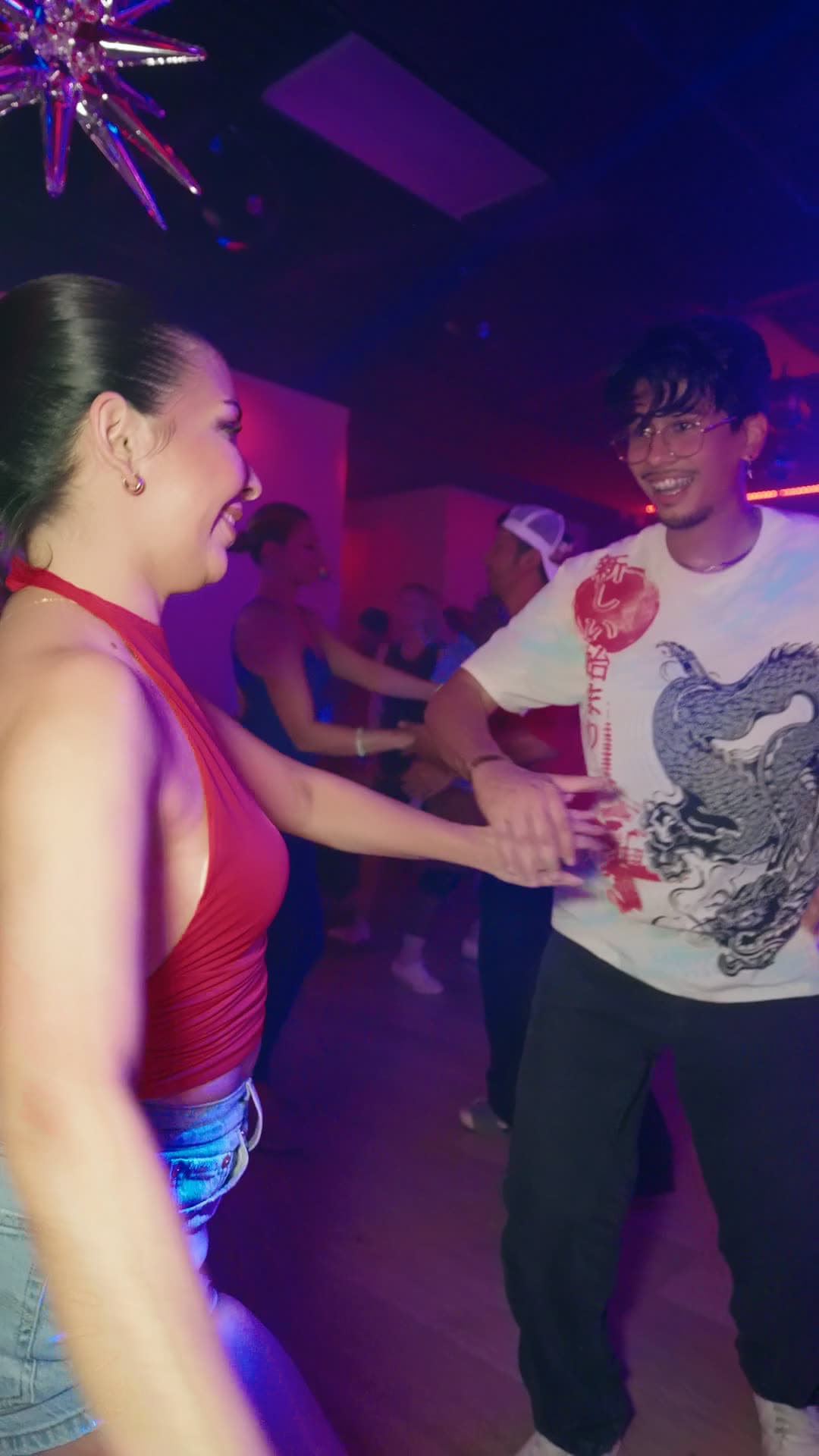
Table of contents
The Weekend That Started This
BSO — Bachata Sensual Orlando — just threw their Galactic BachaZouk Weekender: three nights of Sensual Bachata and Brazilian Zouk sharing one floor, one lineup, and one very mixed crowd. I filmed it, I danced it, and I watched a room full of confident bachata dancers get lovingly humbled by people who train zouk.
This is not a review of the event. The event was beautiful — packed workshops, socials until the lights came on, and a floor where you could watch a bachata couple and a zouk couple dance the same song and tell two completely different stories.
This is about what happens when the two styles stand next to each other. Because proximity is honest. You can hide inside your own scene for years. You cannot hide next to a zouk dancer.
Exposure #1: Your Body Wave Starts in the Wrong Place
Sensual bachata loves the body wave. We put it everywhere — every dip, every close position, every slow chorus. But watch closely at a fusion event and you will see the difference between a wave that travels through a spine and a wave that is performed by arms and shoulders pretending to be a spine.
Zouk dancers train the actual mechanics: head leads the spine, spine articulates vertebra by vertebra, weight stays organized underneath the movement the whole time. That is why their slow motion looks liquid and ours often looks like a pose sequence played at half speed.
The tell is what happens when the music slows down. Slow tempo is an X-ray. If your movement is built from shapes, slow music exposes the gaps between the shapes. If it is built from a connected body, slow music is where you look best.
Exposure #2: You Lead Moves. They Lead Bodies.
The average intermediate bachata leader owns a vocabulary: shadow position, hair-comb, body roll, dip, repeat. The average zouk leader owns something scarier — the follower's balance. They can move a person they met four seconds ago through space and the follower feels safe the entire time, because the lead speaks to her center, not to her arms.
On Saturday night I watched leaders try their whole catalog on zouk-trained followers. The followers responded to everything — beautifully — and in doing so revealed exactly how much of the catalog was memorized choreography rather than actual communication. A trained follower is a mirror. Some leaders did not love the reflection.
The fix is not learning zouk patterns. The fix is stealing zouk's obsession with the invisible part of the dance: posture, frame tone, weight transfer, and the half-second of preparation before every movement. That preparation is the lead. The move is just what the audience sees.
- If your follower guesses instead of feels, the problem is your preparation, not her level.
- Head movement you cannot control is not styling — it is a neck injury with rhythm.
- A dip you cannot exit slowly is a fall you have scheduled.
- Vocabulary impresses dancers for one song. Connection gets you the second one.
What Zouk Dancers Quietly Take From Us
Before the bachata crowd feels too attacked: the exchange runs both ways, and the zouk dancers know it. Bachata's gift is pulse. The güira and bongó give you a grid that keeps the dance honest, grounded, and social. Zouk's open musical structure can drift into interpretive-movement territory — gorgeous, but easy to get lost in. Watch a zouk dancer discover bachata timing discipline and you will see their dance get tighter in one weekend.
That is why bachazouk works as a fusion instead of a collision. Bachata brings the ground. Zouk brings the sky. A dancer who trains both stops arguing about which one is superior, because their body already answered the question.
Do This Before the Next Fusion Event
Take one zouk fundamentals class — not to switch styles, but to audit your own mechanics. Film yourself dancing one slow song and watch only your spine. Then dance with someone from outside your scene and pay attention to what your lead actually transmits when the patterns are stripped away.
And if you were at the weekender: every social dance I filmed is up, clean and downloadable, at the link below. Watch yourself back. The camera is the same honest mirror the zouk dancers are — it just lets you look twice.
Key takeaways
- Slow music is an X-ray: it reveals whether your movement is connected or posed.
- Leading is the half-second of preparation before the move, not the move itself.
- Steal zouk's spine mechanics and keep bachata's pulse — that is the whole fusion.
- Dancing outside your scene once a season exposes more than a year of classes inside it.